Upgrading Your HDB Flat or Condo with Soundproof Windows: What Singapore Residents Need to Know
Upgrading Your HDB Flat or Condo with Soundproof Windows: What Singapore Residents Need to Know
Introduction: The Urban Soundscape of Singapore
Life in Singapore offers convenience, vibrancy, and connectivity. Yet, it also brings one persistent challenge — noise. Whether it’s the traffic along the PIE, the morning MRT rush, nearby construction, or neighbourhood activities, noise pollution affects nearly every resident. For those living in HDB flats and condominiums, managing external noise has become essential for maintaining comfort and peace.
This is why many Singaporeans are choosing to upgrade to soundproof windows — a smart, long-term investment that enhances quality of life while improving property value. If you’re planning to soundproof your HDB flat or condo, here’s everything you need to know.
Why Soundproofing Matters in Singapore Homes
Singapore’s population density and constant development mean noise is an unavoidable part of daily life. But prolonged exposure to high noise levels can have real effects on health and well-being, such as:
-
Poor sleep quality, leading to fatigue and irritability.
-
Increased stress and reduced concentration.
-
Disrupted work-from-home productivity.
-
Hindered child learning and rest.
Installing soundproof windows significantly reduces these disruptions. It creates a peaceful environment where you can rest, work, or spend time with family undisturbed — especially valuable for homes near expressways, schools, or MRT tracks.
Understanding Soundproof Windows
Soundproof windows are engineered to block or absorb external noise using multiple layers of protection. These windows combine acoustic glass technology, air gaps, and airtight seals to prevent sound waves from passing through.
The typical soundproof window system consists of:
-
Two or more layers of glass, often with different thicknesses to block a wider range of frequencies.
-
Laminated acoustic glass with a PVB (polyvinyl butyral) interlayer that absorbs vibrations.
-
Air or argon-filled gaps between panes that disrupt sound transmission.
-
Sealed and reinforced frames that prevent leaks where noise can enter.
In Singapore’s climate, these systems are designed to not only block noise but also resist humidity and heat, making them durable and energy-efficient.
How Soundproof Windows Work
The principle behind soundproof windows lies in acoustic insulation — the ability to reduce sound transmission. When a sound wave hits a surface, part of its energy is reflected, part is absorbed, and part passes through.
Soundproof windows reduce transmission by:
-
Reflecting sound energy at multiple layers.
-
Dampening vibrations through laminated glass.
-
Breaking the sound path via the air gaps between glass panes.
-
Sealing all openings to stop air — and sound — from leaking.
The result is a reduction in outside noise by up to 80–90%, depending on window design and installation quality.
Benefits of Installing Soundproof Windows in HDB Flats and Condos
1. Better Sleep and Relaxation
HDB blocks and condominiums often face busy roads or community spaces. By installing soundproof windows, you can enjoy uninterrupted rest even if there’s heavy traffic or construction outside. This is particularly beneficial for families with children or elderly members sensitive to noise.
2. Improved Focus for Work and Study
With more Singaporeans working from home or studying remotely, a quiet environment is crucial. Soundproof windows help create a productive workspace free from distractions — perfect for professionals, students, or home-based entrepreneurs.
3. Energy Efficiency and Temperature Control
Beyond noise reduction, soundproof windows also provide thermal insulation. They keep indoor temperatures stable, reducing the need for constant air-conditioning. Over time, this helps lower electricity bills while keeping your space cool and comfortable.
4. Enhanced Property Value
Buyers and tenants increasingly look for comfort upgrades like soundproofing. Installing acoustic windows is a premium feature that boosts your property’s market appeal and resale value.
5. Protection Against Dust and Pollutants
Soundproof window systems are tightly sealed, which also keeps out dust, pollen, and outdoor pollutants. This improves indoor air quality — ideal for homes near industrial zones or highways.
Choosing the Right Type of Soundproof Windows
Double-Glazed Windows
Double glazing uses two panes of glass separated by a layer of air or inert gas. It’s ideal for moderate noise areas such as inner-city estates or roads with moderate traffic. It also provides added insulation and condensation resistance.
Laminated Acoustic Glass
This type uses an acoustic interlayer that absorbs vibrations. It’s excellent for homes near MRT tracks, highways, or construction zones. Laminated glass also enhances safety by holding together if broken.
Triple-Glazed Systems
These systems add a third pane and second air gap for superior sound and thermal insulation. Although costlier, they offer maximum comfort for residents in high-noise zones like Paya Lebar, Geylang, or along major expressways.
Secondary Glazing
For condo units or HDB flats where you can’t replace existing windows, secondary glazing adds an additional internal window layer. This provides soundproofing benefits without altering the building façade — useful for meeting HDB or MCST guidelines.
Installation Considerations for HDB and Condo Owners
1. Compliance with HDB and MCST Regulations
Before upgrading, it’s important to check regulations.
-
HDB flats: Ensure that window replacements comply with HDB’s safety guidelines. Only approved contractors should carry out works to maintain compliance.
-
Condos: Approval from the Management Corporation Strata Title (MCST) is often required before modifying exterior fixtures. Soundproof systems can usually be installed inside your unit without altering the external façade.
2. Professional Assessment
A soundproofing specialist will conduct an on-site inspection to measure noise levels, assess frame compatibility, and recommend the ideal glass thickness or system type for your environment.
3. Material and Frame Selection
Different materials affect performance:
-
uPVC frames offer excellent insulation and low maintenance.
-
Aluminium frames are durable and sleek, suitable for modern interiors.
-
Hybrid systems combine the best of both worlds.
4. Ventilation and Safety
For safety and ventilation, certain soundproof systems include acoustic ventilators that let in fresh air without letting in noise. This is particularly useful for bedrooms or kitchens that need natural airflow.
Maintenance Tips for Longevity
Soundproof windows are built for durability but still require regular care to perform optimally:
-
Clean glass and frames regularly to prevent dirt buildup.
-
Inspect seals and gaskets yearly for wear and replace when necessary.
-
Avoid using abrasive cleaners that damage acoustic layers.
-
Have professionals check alignment and seal integrity every few years.
With proper care, high-quality soundproof windows can last 20–30 years or more.
Common Noise Sources in Singapore Homes
Soundproof windows can tackle a range of noises commonly experienced in HDB and condo environments:
-
Traffic Noise: From expressways and nearby roads.
-
Construction Sounds: Drilling, piling, and renovation works.
-
MRT and Bus Lines: Vibrations and screeching from train movements.
-
Neighbourhood Activities: Playgrounds, schools, or community events.
-
Air Conditioning Compressors: Mechanical noise from external units.
By identifying your main noise source, professionals can recommend the most effective soundproofing configuration.
Real-Life Case Examples
Case 1: HDB Flat Facing Expressway
A homeowner in Jurong West replaced standard windows with laminated double-glazed soundproof panels. Result: Traffic noise dropped from 70 decibels to under 40 decibels, transforming the living room into a peaceful retreat.
Case 2: Condo Near MRT Line
A family in Bishan installed triple-glazed acoustic windows. They reported better sleep and lower air-conditioning bills thanks to the improved thermal insulation.
Case 3: Home Office in Paya Lebar
A business owner working remotely upgraded to soundproof windows to eliminate external disruptions. The quieter environment significantly improved focus and productivity.
The Science Behind the Silence
The effectiveness of soundproof windows is measured by the Sound Transmission Class (STC) rating:
-
Typical Single Pane: STC 25–30
-
Double Glazed: STC 35–40
-
Laminated Acoustic Glass: STC 45–55
Every 10-point increase roughly halves the perceived loudness. Thus, upgrading from a standard window (STC 30) to a soundproof window (STC 50) can make street noise sound four times quieter.
Cost Considerations
The cost of soundproof window installation in Singapore depends on:
-
Window size and number of panels.
-
Glass type (laminated, double, or triple-glazed).
-
Frame material and finishing.
-
Installation complexity.
While initial costs are higher than standard windows, the benefits — quieter living, lower utility bills, and increased property value — provide excellent long-term ROI.
Why Choose Professional Installation
DIY or low-quality installations can leave air gaps that defeat the purpose of soundproofing. Professional installers:
-
Conduct precise measurements.
-
Use premium acoustic-grade materials.
-
Ensure airtight sealing and correct alignment.
-
Offer warranties and after-sales support.
This ensures your investment performs optimally for years without maintenance issues.
The Aesthetic Factor
Modern soundproof windows aren’t bulky or industrial-looking. They come in slimline profiles, elegant finishes, and even custom tints that complement your interior design. You can choose from various frame colours to match your décor while maintaining a sleek, contemporary look.
Long-Term Benefits for Singapore Residents
For homeowners, tenants, and landlords alike, the advantages of upgrading to soundproof windows go beyond comfort:
-
Higher rental appeal due to improved living quality.
-
Reduced stress levels and better mental health.
-
Improved energy efficiency in a tropical climate.
-
Compliance with green building initiatives.
In short, they combine science, style, and sustainability into one smart home improvement.
Conclusion: Invest in Quiet, Invest in Quality
Noise pollution is part of city life, but it doesn’t have to define your home experience. By upgrading your HDB flat or condominium with professionally installed soundproof windows, you can reclaim peace and comfort in your personal space.
From blocking external noise to saving energy and boosting property value, soundproof windows are an investment in both well-being and long-term living quality.
For premium-grade acoustic and energy-efficient window solutions, contact Fortuna Singapore — your trusted partner for professional soundproof window installation in Singapore.
The Science Behind Soundproof Windows: How They Keep Singapore Homes Peaceful
The Science Behind Soundproof Windows: How They Keep Singapore Homes Peaceful
Introduction: Living Amidst Urban Noise
Singapore’s skyline is always alive — MRT trains glide by, expressways hum with traffic, and construction projects seem endless. While this vibrancy fuels progress, it also fills the air with constant background noise that seeps into our homes and offices. Over time, exposure to such noise can affect sleep, productivity, and even long-term health.
To combat this, many homeowners and businesses are turning to soundproof windows, a scientifically engineered solution that blocks and absorbs noise rather than merely muffling it.
What Makes a Window Soundproof?
Ordinary windows provide limited protection from sound because glass is a poor insulator of noise. Soundproof windows, on the other hand, combine acoustic engineering principles and precision materials to form an effective barrier. Their secret lies in three key factors:
-
Mass – Thicker and denser materials block low-frequency sounds.
-
Damping – Laminated layers absorb sound vibrations before they pass through.
-
Decoupling – Air gaps between panes prevent sound from transmitting directly.
By strategically balancing these elements, soundproof windows can reduce outdoor noise by up to 80–90 percent, creating a calm indoor space even in Singapore’s busiest neighbourhoods.
Understanding How Sound Travels
Before exploring how soundproofing works, it helps to understand sound itself. Sound is a mechanical wave that travels through air (and other materials) via vibrations. When a sound wave strikes a solid surface — like a windowpane — part of its energy is reflected, part absorbed, and part transmitted through to the other side.
The degree of transmission depends on:
-
The density and thickness of the material
-
The frequency of the sound
-
The air gaps or seals between layers
High-frequency sounds (like children playing or birds chirping) are easier to block, while low-frequency noises (from traffic or heavy machinery) are harder to contain. Soundproof windows are specifically designed to handle both ranges.
Double and Triple Glazing Explained
The most visible feature of soundproof windows is their multi-pane design. Here’s how it works:
Double-Glazed Windows
Two panes of glass are separated by a space filled with air or inert gas (such as argon). This gap acts as a buffer zone that interrupts the sound wave’s path. Because air transmits sound poorly, much of the wave’s energy dissipates before it reaches the inner pane.
Triple-Glazed Windows
Adding a third pane and a second air gap increases the sound barrier even further. Each interface between glass and air weakens the sound wave, leading to superior performance — ideal for homes close to MRT lines or expressways like the CTE or PIE.
Laminated Glass Technology
Instead of relying solely on spacing, laminated acoustic glass sandwiches a transparent interlayer (usually PVB – polyvinyl butyral) between glass sheets. This flexible layer absorbs and disperses vibrations, dramatically reducing the transmission of both airborne and impact sounds.
The Role of the Acoustic Interlayer
The interlayer in laminated glass acts like a cushion that dampens vibrations. When sound waves hit the outer pane, the interlayer flexes slightly, converting part of the wave energy into heat rather than allowing it to continue inward.
Different interlayer materials can target different frequencies:
-
Standard PVB: Good for mid-range noise (voices, TV, etc.)
-
Acoustic PVB: Enhanced damping for low-frequency noise (traffic, bass music)
-
Resin Laminates: Used for industrial or studio-grade applications
This is why high-performance acoustic windows used in recording studios, hotels, and hospitals all rely on specialised interlayers — and homeowners in Singapore can now access the same technology for residential use.
Sealing and Frame Design: The Silent Heroes
Even the best glass won’t perform well if air gaps remain around the frame. Sound travels through the tiniest openings, so proper sealing is essential.
Professional soundproof window systems include:
-
Acoustic seals made of silicone or neoprene
-
Multi-chambered uPVC or aluminium frames
-
Precision gaskets that close tightly without leaving gaps
These prevent air — and therefore sound — from leaking through. In a well-installed system, the combination of heavy glass and airtight framing achieves optimal Sound Transmission Class (STC) ratings of 45–55, meaning loud outdoor noise becomes faint or inaudible indoors.
Singapore’s Environment and Why Science Matters
In Singapore, proximity amplifies sound problems. The compact layout of HDB estates, schools, and road networks means most properties are within earshot of traffic or community noise.
Scientific soundproofing solutions are vital here because:
-
Tropical humidity causes materials to expand and contract — professional frames counteract this.
-
High rainfall demands seals that resist water penetration without compromising soundproofing.
-
Many buildings face glass-to-glass reflections where noise bounces between towers; laminated systems help absorb these reflections.
Thus, the science behind soundproof windows in Singapore isn’t just about blocking sound — it’s also about ensuring durability, safety, and climate compatibility.
Real-World Noise Reduction Examples
To appreciate the difference, let’s consider two scenarios common in Singapore:
1. Condo Near MRT Track
Residents near MRT lines experience an average of 70 decibels during passing trains. After installing laminated double-glazed windows with acoustic PVB interlayers, indoor noise levels drop to below 40 decibels — quieter than a library.
2. HDB Flat Along Expressway
An HDB unit facing the PIE often endures 65–75 decibels of continuous traffic hum. Properly fitted soundproof windows cut this to 35–40 decibels, allowing restful sleep and clear conversation even with windows facing the road.
Beyond Silence: Added Thermal and Energy Benefits
The same technologies that block noise also enhance thermal insulation. Multi-pane designs slow down heat transfer, keeping interiors cooler and reducing air-conditioning load. In Singapore’s tropical climate, this can translate to lower energy bills and a smaller carbon footprint.
Additionally, laminated glass provides UV protection, blocking up to 99 percent of harmful ultraviolet rays that cause furniture fading and skin damage. In other words, the science that keeps noise out also keeps comfort and health in.
Safety and Security Advantages
The laminated interlayer doesn’t just dampen sound — it also holds glass shards together if the window breaks. This makes soundproof windows significantly safer than single-pane versions.
For ground-floor units or street-facing offices, this added strength acts as a deterrent against forced entry while maintaining sleek, modern aesthetics.
Measuring Acoustic Performance: Understanding STC Ratings
The Sound Transmission Class (STC) rating quantifies how well a window assembly blocks airborne sound.
Typical ranges include:
-
Single-Pane Glass: 25–30 STC
-
Double-Glazed Window: 35–40 STC
-
Acoustic Laminated System: 45–55 STC
Each 10-point increase in STC roughly halves perceived loudness. Therefore, upgrading from a regular 30 STC window to a 50 STC soundproof system can make outdoor noise sound four times quieter.
Common Misconceptions About Soundproof Windows
-
“I can just use thicker glass.”
Thicker glass helps but isn’t enough. Without air gaps or interlayers, low-frequency sounds will still penetrate. -
“Curtains or foam panels can do the same job.”
Soft furnishings absorb echoes inside a room but don’t block external noise. True soundproofing requires structural barriers. -
“Soundproof windows must be bulky or unattractive.”
Modern systems are slim, elegant, and available in multiple frame finishes to match HDB, condo, or office interiors.
Installation Precision: Why It Matters
The science of soundproofing is only as effective as the installation quality. Professional installers measure window openings precisely, ensuring the glazing and seals fit perfectly. Even a 1-millimetre gap can undermine results.
Steps typically include:
-
Noise Level Assessment – Measuring current decibel levels.
-
Material Selection – Recommending glass thickness and interlayer type.
-
Custom Fabrication – Manufacturing panels to exact size.
-
Professional Fitting – Sealing with acoustic silicone and alignment checks.
Trusted companies in Singapore follow international acoustic standards to deliver consistent, measurable performance.
Maintaining Acoustic Performance
To keep soundproof windows performing optimally:
-
Clean tracks and seals regularly to prevent dust from weakening closure.
-
Avoid harsh chemicals that may degrade acoustic seals.
-
Re-seal joints every few years if signs of wear appear.
-
Schedule periodic professional inspections to ensure airtightness.
Well-maintained windows can maintain their acoustic integrity for decades.
Choosing the Right Soundproof Window for Your Home
The “best” solution depends on your environment and noise type. For example:
-
Facing Roads or Expressways: Double-glazed laminated glass.
-
Near MRT Lines or Industrial Areas: Triple-glazed or acoustic laminated systems.
-
Older HDB Units with Fixed Frames: Secondary glazing systems that overlay existing windows.
Discussing your needs with an experienced provider ensures you achieve the perfect balance between noise control, energy efficiency, and budget.
Why Singapore Homeowners Are Making the Switch
More Singaporeans are upgrading to soundproof windows due to:
-
Increased urbanisation and road expansions.
-
Rising awareness of mental wellness and sleep quality.
-
Government encouragement for energy-efficient building designs.
-
Higher property value from premium fittings.
Whether in a bustling neighbourhood like Tanjong Pagar or a peaceful suburb like Bukit Timah, peace and quiet are now viewed as a form of modern luxury — and soundproof windows deliver exactly that.
Conclusion: Quiet Living Through Smart Science
The tranquillity offered by soundproof windows isn’t magic — it’s the result of decades of scientific innovation in materials and engineering. By using multiple layers, acoustic interlayers, airtight seals, and precise installation, these windows transform noisy city apartments into peaceful sanctuaries.
In Singapore’s ever-vibrant environment, soundproof windows provide not just comfort but also long-term value, energy savings, and wellness benefits.
For premium-grade acoustic and energy-efficient window solutions, contact Fortuna Singapore — your trusted partner for professional soundproof window installation.
Why Soundproof Windows Are a Must-Have for Singapore Homes and Offices
Why Soundproof Windows Are a Must-Have for Singapore Homes and Offices
Introduction: The Growing Noise Challenge in Singapore
Living or working in Singapore offers many conveniences — world-class transport, vibrant neighbourhoods, and a dynamic lifestyle. However, one downside to urban living is noise pollution. With expressways, MRT lines, construction projects, and busy commercial hubs scattered across the island, Singaporeans are increasingly exposed to high noise levels daily.
Whether you reside in an HDB flat along a main road or work in an office near a bustling junction, excessive noise can take a toll on your mental well-being, focus, and overall comfort. This is where soundproof windows come into play as an essential feature for modern Singapore living.
Understanding Soundproof Windows
Soundproof windows are specially designed to reduce or eliminate external noise from entering indoor spaces. They use advanced materials and engineering techniques — such as laminated glass layers, air gaps, and acoustic seals — to block sound waves effectively.
Unlike traditional single-pane windows, soundproof windows create a noise barrier that helps maintain a tranquil and peaceful indoor environment, even in high-traffic or industrial areas.
Key components that make soundproof windows effective include:
-
Double or Triple Glazing: Multiple layers of glass with air or inert gas spaces between them.
-
Acoustic Interlayers: Special materials like PVB (polyvinyl butyral) that absorb vibrations.
-
Sealed Frames: Tight insulation prevents air gaps where sound can travel.
-
Quality Installation: Proper fitting ensures no sound leakage around the window frame.
Why Soundproof Windows Matter in Singapore
Singapore’s dense urban landscape means most residential and commercial properties are close to roads, train lines, or construction zones. This creates constant exposure to traffic noise, honking, and drilling.
Here are key reasons why soundproof windows are becoming increasingly popular in Singapore:
1. Peaceful Living in a Noisy City
Noise pollution can disrupt sleep, increase stress, and reduce concentration. In homes, families struggle to rest properly, while in offices, employees find it difficult to stay focused. Soundproof windows drastically cut down on external noise, helping occupants enjoy quietness and relaxation even in high-density neighbourhoods.
2. Better Sleep Quality
Studies have shown that uninterrupted sleep improves productivity, mood, and health. If your home is near expressways such as the PIE, CTE, or AYE, or close to MRT tracks, soundproof windows can help create a calm sleeping environment. They reduce decibel levels to a point where external noise becomes barely noticeable.
3. Enhanced Focus and Productivity in Offices
In workplaces, noise can lead to distraction and fatigue. Employees exposed to constant background noise experience reduced concentration and slower decision-making. Installing soundproof windows ensures a quieter workspace, allowing for better performance, creativity, and employee satisfaction.
4. Energy Efficiency and Thermal Insulation
Many soundproof windows also provide thermal insulation benefits. Their layered design and airtight seals reduce heat transfer, keeping interiors cooler. This helps in lowering air-conditioning usage, leading to long-term energy savings — an attractive feature for both homeowners and businesses.
5. Added Property Value
Soundproofing your property is considered a valuable upgrade. It not only enhances comfort but also increases resale or rental appeal. In Singapore’s property market, where buyers and tenants value comfort and modern features, soundproof windows can set your property apart from others.
How Soundproof Windows Work
Soundproof windows operate on the principle of acoustic dampening — reducing the energy of sound waves before they reach the interior. When sound hits a surface, it can either reflect, transmit, or be absorbed. The design of soundproof windows focuses on minimising transmission through multiple layers and air gaps.
Let’s break down the process:
-
Sound Reflection: The first glass pane reflects some portion of the sound.
-
Sound Absorption: The laminated interlayer absorbs part of the vibration.
-
Sound Dissipation: The air gap between panes further weakens the sound energy.
-
Final Barrier: The second glass layer and sealed frame block remaining noise.
This multi-stage reduction helps achieve up to 80–90% noise reduction, depending on the material and installation quality.
Common Types of Soundproof Windows in Singapore
There are several soundproof window configurations available in the market, each catering to different needs and budgets:
1. Double-Glazed Windows
The most common option, featuring two panes of glass separated by a gap filled with air or inert gas. Ideal for HDB flats and condominiums, double glazing significantly cuts noise and improves insulation.
2. Laminated Acoustic Glass
Laminated glass sandwiches a plastic interlayer that absorbs vibrations. It’s excellent for areas exposed to high noise levels, like near MRT tracks or highways.
3. Secondary Glazing
This involves adding a second layer of glass over existing windows. It’s an effective solution for homeowners who cannot replace their windows due to building restrictions, such as in heritage or conservation areas.
4. Triple-Glazed Systems
For maximum sound reduction, triple-glazed windows provide three layers of glass and two air gaps. While more costly, they offer unmatched noise and thermal performance.
Where Soundproof Windows Make the Biggest Difference
Residential Properties
Homeowners living in noisy neighbourhoods such as Toa Payoh, Bukit Timah, or near major roads like the ECP and TPE often report dramatic improvements in comfort after installing soundproof windows. Families with young children or elderly members particularly appreciate the peace they bring.
Offices and Commercial Spaces
Businesses located in commercial hubs like Raffles Place, Orchard Road, or Jurong face high ambient noise levels. Installing soundproof windows helps maintain a professional atmosphere conducive to meetings, calls, and focused work.
Hotels and Serviced Apartments
Hospitality venues rely heavily on guest satisfaction. Reducing external noise ensures a better night’s rest for guests, leading to improved reviews and repeat bookings.
Schools and Healthcare Facilities
Educational and healthcare environments benefit immensely from quiet conditions. Soundproof windows support learning focus in classrooms and help create a calm atmosphere in clinics or recovery wards.
The Health and Well-being Benefits
Constant noise exposure isn’t just an annoyance — it’s linked to stress, high blood pressure, and anxiety. Over time, this can affect cardiovascular health and mental well-being.
Soundproof windows serve as a protective barrier, allowing occupants to enjoy silence and serenity. With less stress and better sleep, individuals experience improved mood, focus, and productivity throughout the day.
Installation Considerations in Singapore
Installing soundproof windows requires professional assessment to ensure compatibility with your property type, such as HDB flats, condominiums, or landed homes.
Some key factors to consider include:
-
Window Frame Type: Aluminium, uPVC, or timber frames affect acoustic performance.
-
Thickness of Glass: Thicker panes generally block more noise.
-
Sealant Quality: Poor sealing can compromise effectiveness.
-
Regulatory Compliance: For HDB properties, always ensure installations comply with HDB guidelines and safety standards.
Professional installers in Singapore conduct on-site inspections to measure sound levels and recommend suitable glazing configurations tailored to your environment.
Maintenance Tips for Soundproof Windows
To ensure long-lasting performance:
-
Clean glass and frames regularly to prevent dust buildup.
-
Inspect seals annually for wear and tear.
-
Reapply or replace weatherstripping when necessary.
-
Avoid slamming windows to maintain tight seals.
-
Schedule professional maintenance every few years for alignment checks.
Proper upkeep ensures that your windows continue to perform effectively and retain their acoustic properties over time.
Cost vs. Long-Term Value
While soundproof windows may require a higher upfront investment than regular windows, they deliver long-term returns in comfort, health, and energy savings.
Think of them as an investment in your quality of life — especially when living or working in Singapore’s high-density urban environment.
On average, homeowners experience:
-
Up to 40–50% reduction in air-conditioning bills due to better insulation.
-
Noticeable increase in property value.
-
Years of uninterrupted quiet enjoyment.
For businesses, the productivity boost and employee satisfaction make the cost easily justifiable.
Why Choose Professional Soundproof Window Installers
Professional installation ensures that your soundproof windows perform to their full potential. Experts provide accurate sound measurements, quality materials, and precision fitting — preventing air gaps that can compromise noise reduction.
Choosing an experienced installer also guarantees proper after-sales service, warranty, and compliance with Singapore’s safety standards.
Conclusion: Creating a Quieter, Healthier Environment
In a fast-paced city like Singapore, peace and quiet are luxuries that greatly enhance daily living. Soundproof windows are more than just an upgrade — they are a necessity for comfort, health, and productivity.
Whether for your home or office, investing in professionally installed soundproof windows ensures a peaceful sanctuary amidst the city’s energy.
For premium-grade acoustic and energy-efficient window solutions, contact Fortuna Singapore — your trusted partner for professional soundproof window installation.
Top 5 noisiest neighborhoods in Singapore
Top 5 Noisiest Neighborhood in Singapore Top 5 Noisiest Neighborhood in Singapore rose
June 9, 2022

Do you know that the noisiest Neighborhood in Singapore is not Orchard? In a study conducted by an NUS audiologist in 2017, the average reading during the day was 69.4 dB, which is higher than NEA’s recommended 67dB. There are a total of 18,768 sound measurements recorded over a span period of 2.5months. The noisiest neighborhood turns out to be Serangoon (73.1dB), followed by Orchard and Outram (both 72.8dB), Bukit Timah (72.6dB) and lastly Clementi (71.8). The 9th ranking was at Yishun (70.8dB).
Even wondered how loud is considered too loud? A human ear’s threshold is at 120-130dB but a maximum of 85dB constantly over a period of time can do irreversible damage to the ears. So putting this information into context for better understanding in our daily lives, we experience traffic noise at an average of 80dB, a having a conversation at 60dB, a library environment of 40dB, and normal breathing in an isolated quiet room at 10Db.

Source: Earq.com
It is not possible to attain 100% soundproof, as breathing also incurs 10dB. In most content, Soundproofing can be measured in STC (Sound Transmission Class). STC is a general term to give rating to how much a system’s performance reduces noise in a controlled setting. However, an STC rating does not equate to how much db (Decibel) can be reduced. For instance, a typical traditional Aluminum single glazed window STC rating is at STC 15-20 while a typical upgraded Aluminum Double Glazed is at STC 25-30.
Commercial Acoustic Windows can go up to STC 65. The trick to achieving a better performance STC rating would be a bigger air space (between the glass panels) and a thicker glass. Thus, it is not realistic to have commercial-grade Acoustic Windows in a residential area as the wall is going to be thinner than the Acoustic Frame System. For instance, a typical HDB Pharapet wall façade thickness is 125mm to accommodate both the windows and the grille.
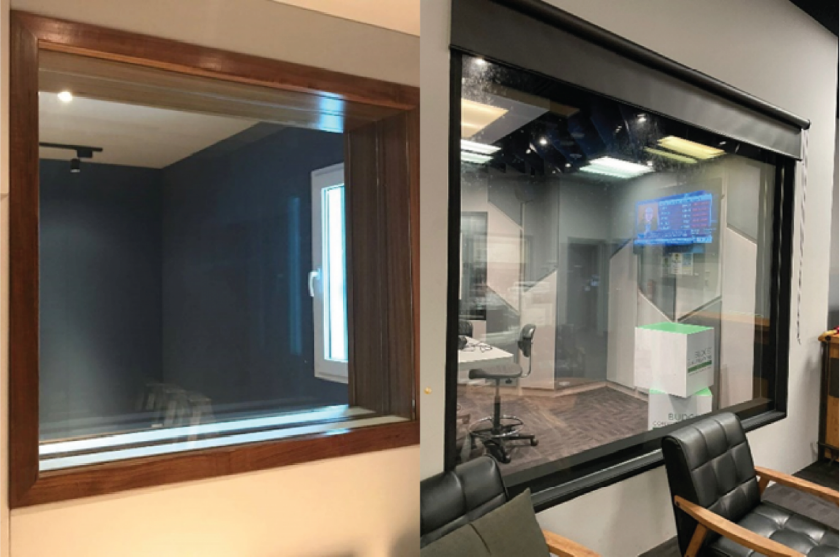
The Acoustic Commercial Grade Glass can take up to 320mm (Fixed Panels) with an average of 125mm air space in between the glass panes. Therefore this is not realistic to fabricate due to the high cost and impracticality. Not to mention that the same set of precise measurement glasses may not suit your next place of accommodation when you are shifting your residency.
Fortuna Soundproof Windows Pte Ltd is a local SME company, that prides itself to bring acoustic windows to the residential sector, specifically the HDB neighborhood area where the residential living is very clustered and traffic noise is very common.
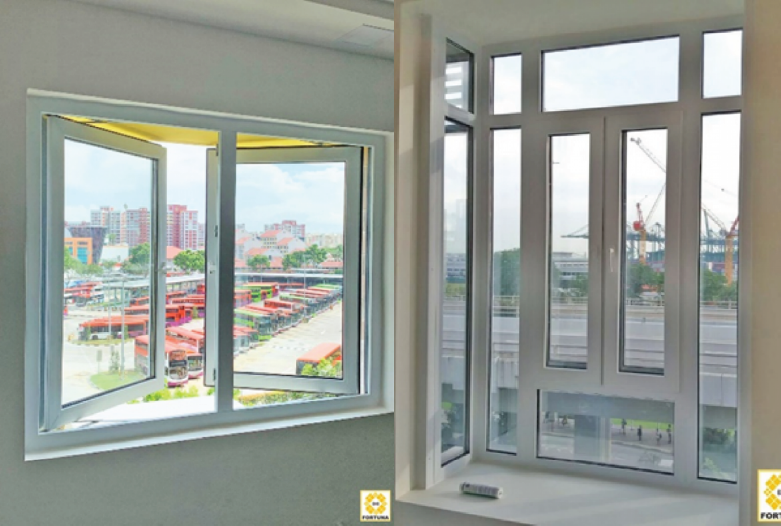
Not to mention resumed construction works and renovation works are on tight schedules to completion, both in residential and commercial works. These noises are long term noises that will take years to complete.
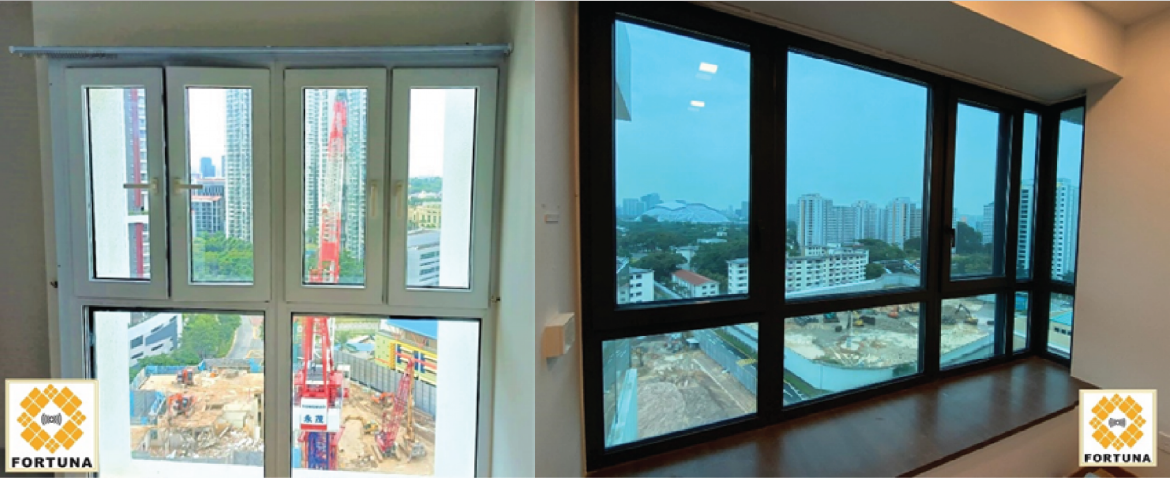
Why Fortuna’s Windows are so Soundproof?
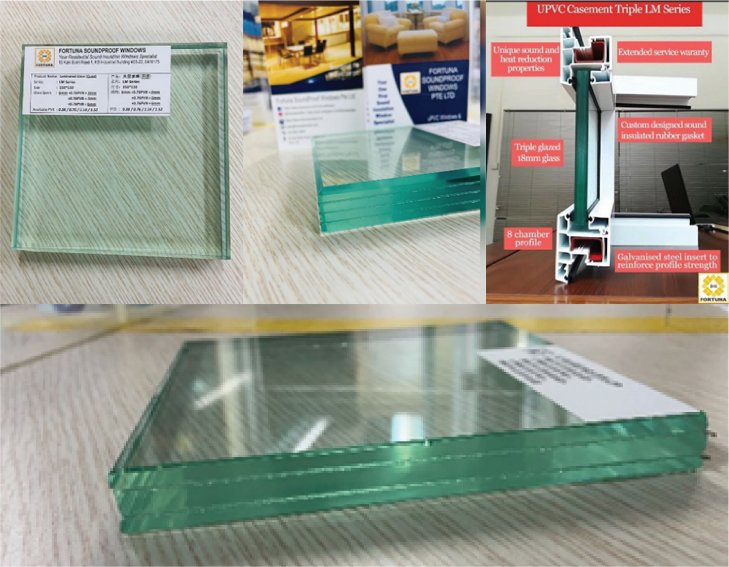
- Frame Profile – Fortuna’s starred profile is UPVC frame, also known as Thermo-Plastic. Which provides more acoustic and thermal insulation performance over Aluminum and Timber Windows. The multi chambers containing air space are excellent insulators for both noise and heat. UPVC materials are also resistant to sunlight, oxidation, fire, frost, electricity, and acoustic properties.

- Glass Glazing – Fortuna’s starred Triple Laminated Glass are one of a kind, bringing the acoustic glass to a compressed minimized thickness to achieve a good quality STC rating, thus able to provide quality acoustic windows and doors in the Residential market. The thick laminated glass can also be safety glass, which has a lot of advantages over the traditional float and tempered glass. I.e. Safety, Security, Acoustic, Blast resistance, UV reduction and Fire resistance. P.S Quad-glazed is even possible too, for Home Recording Studios.
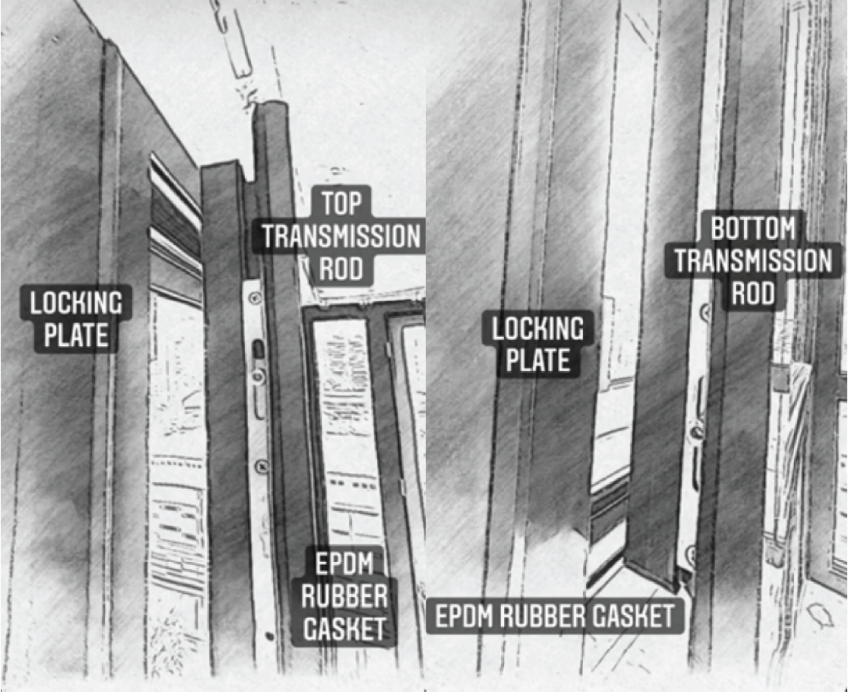
- Double Compression System – The air compression system truly makes the difference in achieving the final elimination of noise reduction. The triple locking system compressed the opening casement panels to be tucked as tightly to the main frame, providing air tightness, water tightness, security and acoustic performance.
Hearing is believing. In the context of acoustic, we strive to achieve a library environment for every household. Visit our showroom to understand and have a feel of these acoustic windows and have a permanent solution to your sleepless nights and look forwards to greater performance in your daily lives.
Sports Facility Noise: https://www.facebook.com/FortunaWindow/videos/565158817901305
Bus Traffic Noise Test: https://www.youtube.com/watch?v=ZgDjcqXDpho&t=2s
Sin Ming resident spends $6,900 to soundproof flat windows as noisy chickens disturb sleep at 3am
Sin Ming resident spends S$6,900 to soundproof flat windows as noisy chickens disturb sleep at 3am
Pok pok kay.
Belmont Lay | September 15, 2022, 04:58 PM
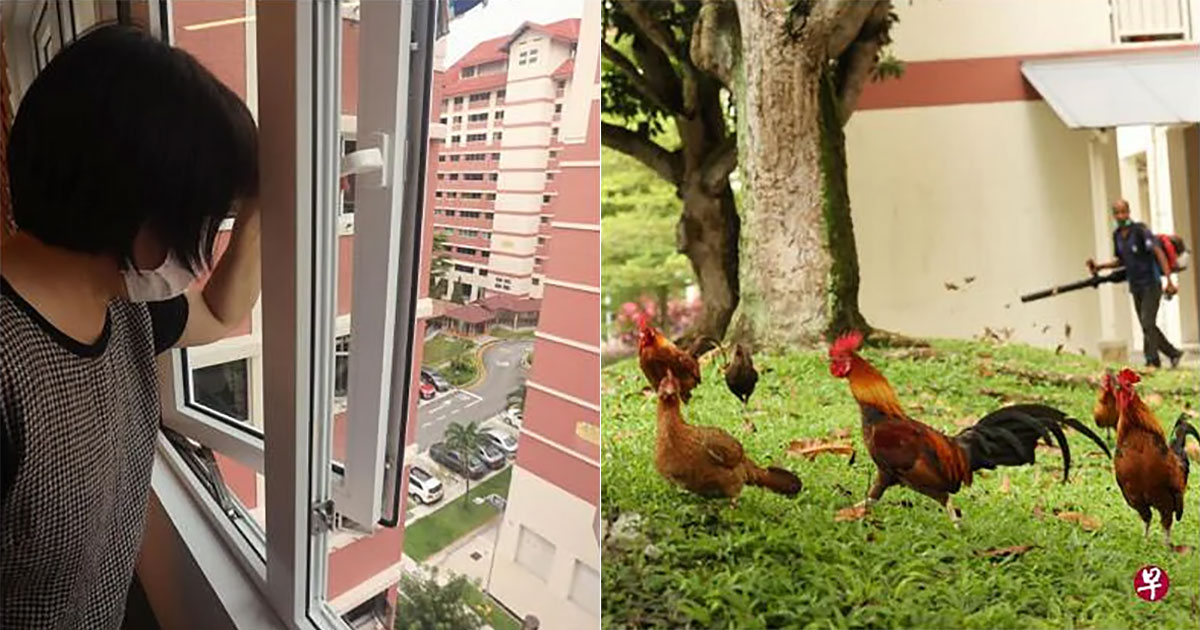
Chickens in Sin Ming have been accused of being too noisy again, Shin Min Daily News reported. This time, a complainant claimed that some 20 chickens roaming the estate would crow in the mornings and evenings, sometimes at 3am.
Noisy at 3am
A 58-year-old housewife, identified only by her surname Xu, lives in Block 454 Sin Ming Avenue.
She shared that the number of chickens in the estate has grown to more than 20, and are affecting the quality of sleep residents get as they start crowing even before the sun rises.
She said: “Sometimes the chickens fly up to the trees and crow, and they do it even at 2am or 3am. It’s useless to close the doors and windows. My daughter and husband have to get up early for work, and they often don’t get enough sleep [because of the noise].”
Spent S$6,900 soundproofing windows
The resident revealed that she recently spent S$6,900 to install soundproof windows in two bedrooms.
Although the crowing of chickens is still audible as the sound travels through the house from the living room window, it has stopped affecting the family’s quality of sleep.
Shin Min visited the estate and found more than 10 chickens roaming around, but added that they are wary of people.
A 67-year-old resident in the estate said the chickens can be heard crowing in the middle of the night and have woken her grandson up, who then had to be coaxed back to sleep.
Another 70-year-old resident, who lives in the block across the road, added that the noise can be heard even from where she lives.
Not all bothered
Xu told Shin Min some residents are not bothered by the presence of the chickens.
She is aware that they feel chickens are reminiscent of their days of living in the kampung, and that humans should leave them alone.
However, Xu maintained that they should put themselves in affected residents’ shoes too.
Most of the residents interviewed expressed their hope that the relevant authorities would approach the situation in a measured way.
Measures taken so far
A National Parks Board investigation in March 2022 showed there were 69 chickens in the area, up from 50 in 2017. This was despite the culling of 24 chickens from the estate in 2017.
Currently, various groups have come together to address the issue.
The different bodies include NParks, Thomson Sin Ming Court Residents’ Committee, Acres (Animal Concerns Research and Education Society), and Bishan-Toa Payoh Town Council.
So far, the measures taken by the team include placing umbrella-shaped nets on trees to prevent chickens from roosting there, and regularly picking up eggs in the area to avoid over-breeding.
The authorities have also appealed to the public not to feed chickens indiscriminately.
There are signs located on the ground floor of the flats to remind the public that feeding of chickens is prohibited.
Top photo via Shin Min Daily News //https://mothership.sg/2022/09/sin-ming-chicken-noisy-soundproof-window/?fbclid=IwAR29PMGVcP7TJSLcZf64o1Ql8cwFpr_lMTwYqe OwfSJsfcCVAqEcgvWd_zw
Woman sells Bedok flat as neighbor’s parrot too noisy day & night affecting her sleep
Woman sells Bedok flat as neighbor’s parrot too noisy day & night affecting her sleep One reason to sell your home.
Belmont Lay | October 03, 2022, 08:19 PM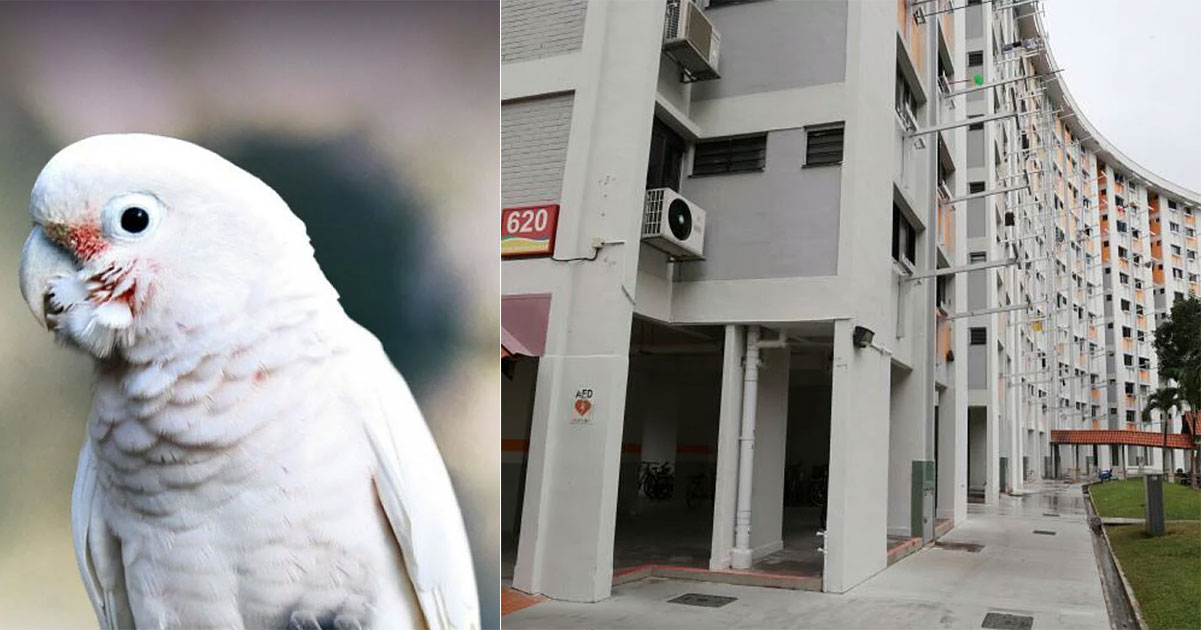
Some people in Singapore sell their HDB flat to upgrade to a bigger home and achieve social mobility.
Others sell their public housing apartment to downgrade and live off their mini windfall.
But for one 45-year-old woman in Bedok, she sold her HDB flat because her neighbor’s parrot was too noisy.
This bizarre reason for offloading a piece of property in Singapore was reported by Shin Min Daily News.
Noisy parrot to blame
According to the Chinese media, the resident at Block 620 Bedok Reservoir Road, whose surname is Wu, has had it with her neighbor’s parrot, which apparently made noise in the middle of the night and early in the morning.
Wu said: “I’ve lived here for 13 years and have always been comfortable until a year ago, when the tranquility was broken.”
She claimed that the parrot was kept in a cage, which was placed along the corridor after her new neighbor moved in.
She added that from 7pm onwards, the family that owns the parrot would begin to whistle, and the parrot would screech in response.
Wu continued: “The situation would last till 10pm, and it didn’t stop. On weekends, the situation would get worse and it’s hard for us to sleep.”
“At first, for the sake of being good neighbors, I held back and didn’t say anything, but I didn’t expect the family to take advantage of our silence.”
Other neighbors affected too
A Shin Min reporter went to the block to speak to other residents who claimed they were similarly affected by the noises that the parrot made.
The reporter said the squawks of the parrot could be heard upon exiting the lift.
A 26-year-old resident said she would use ear plugs to go to sleep, but the bird noises are still audible.
Another 50-year-old resident said he would hear the bird sounds, but felt they did not affect him as much.
The male occupant of the unit that owns the parrot said that he would “return” the parrot but did not elaborate.
Noise apparently got worse
Wu explained that the parrot’s owner started off by whistling occasionally. However, the frequency of these interactions grew and the noise would persist even till late at night.
Wu said: “I once complained [about the noise], and the neighbor moved the bird cage into the house. But the problem was exacerbated.”
“They would interact with the bird till late, which made things unbearable for me. My child has to go to school, and I have to go to work. They’re too inconsiderate.”
‘Hate going home’
Wu further claimed that she is a light sleeper and has not been able to get a good night’s rest because of the bird noises.
She even claimed she grew to “hate going home”.
She said: “I couldn’t bear to go home after a busy day as I couldn’t rest. After going through this torture, I decided to sell the house.”
However, she still has to stay on for a few more months it seems.
She added: “I have successfully found a buyer, and I can escape this misery next February.”
Top photos via Shin Min Daily News //https://mothership.sg/2022/10/parrot-noisy-sell-flat/#:~:text=Wu%20further%20claimed%20that%20she,decided%20to%20sell%20the %20house.%22
Chanting noises at Compassvale Drive cause weeks of ‘headache’ for residents
 Singapore
Chanting noises at Compassvale Drive cause weeks of ‘headache’ for residents
Residents of Block 201C, Compassvale Drive said they have been disturbed by weeks of chanting and knocking noises since the start of the year.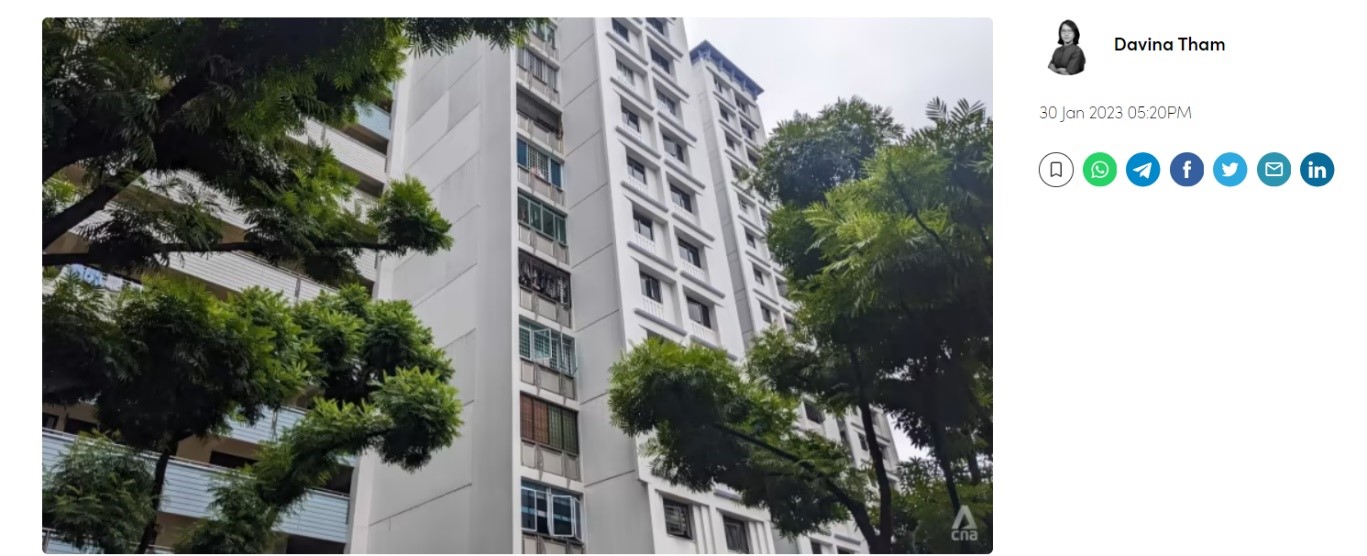
Residents of Block 201C, Compassvale Drive have been plagued by weeks of chanting and knocking noises, Jan 30, 2023. (Photo: CNA/Davina Tham)
SINGAPORE: Since the start of the year, some residents at Compassvale Drive have been plagued by chanting and knocking noises that can be heard at all hours of the day and night.
The sounds, described by residents as an audio recording of sutra chanting and knocking on a “wooden fish” – a ceremonial instrument used by Buddhists – could not be heard when CNA visited the flats on Monday morning (Jan 30).
But several residents said they had been hearing the noises for weeks, most recently on Sunday. Most of those affected live in a corner of Block 201C, Compassvale Drive.
A resident on the 11th floor who only wanted to be known as Mr Choo, 67, said the noises could be heard in his home at all hours of the day and night and were “very loud”.
When it first started, Mr Choo thought the noises came from a wake and would only last a few days. He estimated it has now been two weeks.
The noises have woken him up in the middle of the night, so he has taken to closing the windows of his master bedroom before going to sleep.
Mr Choo believed the sounds were from a recording because “they cannot be so amazing (as to chant and knock) from morning for several hours, it’s impossible”.
“When I go to sleep and wake up in the middle of the night, it’s still that sound. When I wake up in the morning, it’s that sound again,” he said in Mandarin.
Another resident on the fifth floor who only wanted to be known as Ms Grace, 50, has also had difficulty falling asleep because of the noise.
It can be heard the “whole day” from her bedrooms and kitchen, and has been affecting her since the start of January, she said.
An unsigned handwritten notice calling for an end to the noise was affixed to the wall near the ground floor lift lobby when CNA visited.
“Be considerate to your neighbors and lower down your volume or close off your windows,” it read.
UPSTAIRS NEIGHBOUR
A 71-year-old resident of Block 201C, who declined to give his name, said he believed the noise came from the flat directly above his.
The resident recalled that when he moved into the flat a decade ago, he also had similar problems with his neighbor upstairs.
At the time, he tried asking the neighbor to lower the volume. The neighbor did not open the door to him, but started playing recordings from a speaker set on a chair outside the front door, he claimed.
The neighbor whom the resident was referring to did not answer the door when CNA visited.
“It was very much a headache because we had to get up for work last time. Our kids were still small and had to study, it was a headache,” the 71-year-old man said in Mandarin.
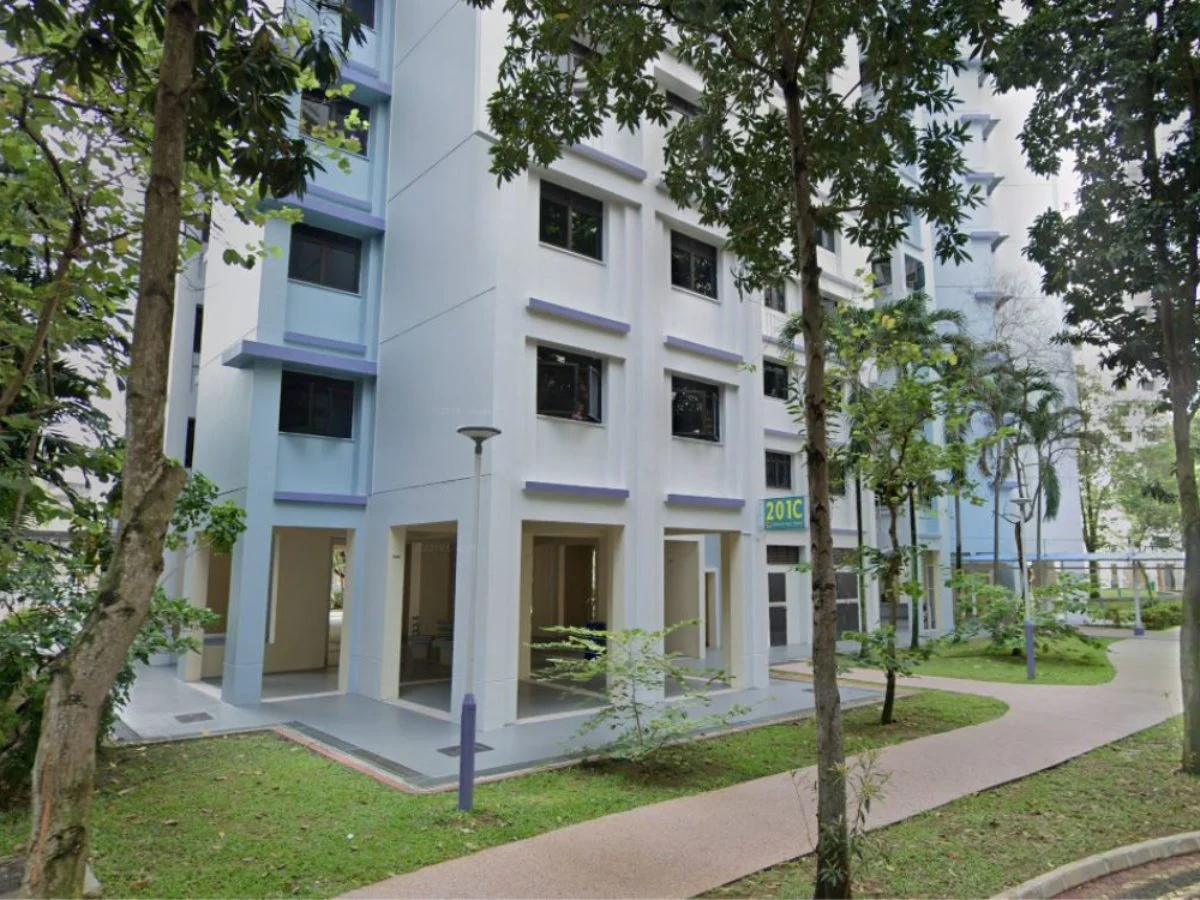
Blocks 201B and 201C Compassvale Drive, where residents have been plagued by chanting and knocking noises, Jan 30, 2023. (Photo: CNA/Davina Tham)
Ground floor resident Mr Mohammad Shafie Rusli, 26, recalled hearing the chanting and knocking noises from November last year.
Mr Shafie, who comes home from work at around 2am to 3am, said that the sounds are already ongoing when he reaches home, and continue through the night.
The noises are so loud that he at first suspected they came from his own block, which is separated from Block 201C by a fitness corner and a small path.
“It doesn’t disturb me … I’m just very curious where is it from, that’s all,” he said.
“Because it’s their religious (practice) and I do respect their religious (practice). So the only curious part for me is that, where is it from? Which unit? That’s all.
” Mr Choo similarly said that he has not asked around to find out the source. Neither has he lodged a complaint.
“When people chant sutras you can’t interfere,” he said. “Because this is their religion. You can’t say (to them), you can’t do this. The most you can do is ask them to lower the volume.
” CNA has contacted Sengkang Town Council for comment.
Source:CNA/dv(gr) //https://www.channelnewsasia.com/singapore/201c-compassvale-drive-chanting-neighbour-noise-pollution-3241076 ?cid=internal_sharetool_iphone_18052023_cna
Best Window Contractors In Singapore
Top Window Contractors In Singapore